Sunday, June 3, 2018
Saturday, June 2, 2018
Tales from the Galapagos: Puerto Ayora & the Darwin Research Station
This day's adventure included a visit to the Darwin Research Station and the town of Puerto Ayora on Santa Cruz island. While open to visitors, the station is an active research center for the Galapagos islands and a large breeding center for tortoises.
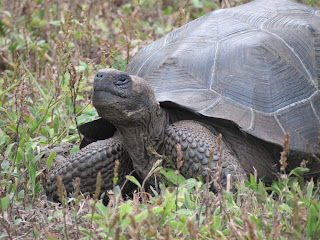
Tortoise shells vary by species and are said to have evolved based on the type of vegetation available on their island of residence. The photo above is a dome shell and the one below is called a saddle back.
This tortoise would have come from an island where the vegetation was up high which is why his neck is so long and accounts for the saddle back shell shape.
All of the tortoises in this area were once 'pets' for locals around Ecuador. Before the islands were established as a national park, having a pet tortoise was cool and handed down through generations (tortoises can live to well over 100 years). This project is working to identify which islands these belong, rehabilitate them to live in the wild and then release them.
We then had some free time in town. Not much to see - mostly tourist shops selling t-shirts, but there was the occasional lovely view.
And then there was the fish market in the center of town. Note the sea lion waiting for handouts and the pelicans waiting for the sea lion to get full! Since all the animals are protected here, the locals just put up with them.
Tortoise shells vary by species and are said to have evolved based on the type of vegetation available on their island of residence. The photo above is a dome shell and the one below is called a saddle back.
This tortoise would have come from an island where the vegetation was up high which is why his neck is so long and accounts for the saddle back shell shape.
All of the tortoises in this area were once 'pets' for locals around Ecuador. Before the islands were established as a national park, having a pet tortoise was cool and handed down through generations (tortoises can live to well over 100 years). This project is working to identify which islands these belong, rehabilitate them to live in the wild and then release them.
We then had some free time in town. Not much to see - mostly tourist shops selling t-shirts, but there was the occasional lovely view.
And then there was the fish market in the center of town. Note the sea lion waiting for handouts and the pelicans waiting for the sea lion to get full! Since all the animals are protected here, the locals just put up with them.
Friday, June 1, 2018
Tales from the Galapagos: Espanola Island
Although it's difficult to choose a favorite, Espanola island might be #1 for me. The hike wasn't too hard, the weather was warm, but not stifling and we saw so many interesting animals.
A two for one in this photo. In the foreground is the Christmas marine iguana. Named such because the males turn bright red and green during mating season. We were a bit late so the red and green aren't so pronounced, but you can still see how they got their name. Behind him is a cute little lava lizard.
I'm not sure what this bird was, but the photo gives you a good idea of how unafraid of people the animals are in the Galapagos. They didn't seem to have the same rules of 'don't touch' that we did!
Baby sea lion nursing. Sea lion females are practically continuously pregnant once they reach maturity. This mama is suckling a 1-2 year old while pregnant. Babies nurse for their first two years before they're on their own. And again, neither of them could have cared less that 14 people were standing in front of them snapping photos!
Lava lizard posing for the camera.
And the star of this island, the Galapagos Albatross. This species is only found in the Galapagos. They nest on the ground and mate for life.
Can you spot the marine iguana swimming in the natural pool?
Iguanas get cold in the ocean so pile upon one another on the rocks to soak up the sun. Trivia: a group of iguanas is called a mess!
Another view of our handsome Christmas marine iguana.
One of the very interesting things about the Albatross is their 'dancing' - a form of communication for sure and also part of the mating ritual. I caught a bit of video of these two dancing and it's just amazing. YouTube it or ask me next time I'm around.
And last is the Galapagos hawk who sits on top of the food chain out here. There are really no predators for most of these animals except this hawk who does not scavenge but hunts live food. Watch out little lizards and baby birds!
A two for one in this photo. In the foreground is the Christmas marine iguana. Named such because the males turn bright red and green during mating season. We were a bit late so the red and green aren't so pronounced, but you can still see how they got their name. Behind him is a cute little lava lizard.
I'm not sure what this bird was, but the photo gives you a good idea of how unafraid of people the animals are in the Galapagos. They didn't seem to have the same rules of 'don't touch' that we did!
Baby sea lion nursing. Sea lion females are practically continuously pregnant once they reach maturity. This mama is suckling a 1-2 year old while pregnant. Babies nurse for their first two years before they're on their own. And again, neither of them could have cared less that 14 people were standing in front of them snapping photos!
Lava lizard posing for the camera.
And the star of this island, the Galapagos Albatross. This species is only found in the Galapagos. They nest on the ground and mate for life.
Can you spot the marine iguana swimming in the natural pool?
Iguanas get cold in the ocean so pile upon one another on the rocks to soak up the sun. Trivia: a group of iguanas is called a mess!
Another view of our handsome Christmas marine iguana.
One of the very interesting things about the Albatross is their 'dancing' - a form of communication for sure and also part of the mating ritual. I caught a bit of video of these two dancing and it's just amazing. YouTube it or ask me next time I'm around.
And last is the Galapagos hawk who sits on top of the food chain out here. There are really no predators for most of these animals except this hawk who does not scavenge but hunts live food. Watch out little lizards and baby birds!
Thursday, May 31, 2018
Tales from the Galapagos: More San Cristobal Island
After the rigorous trek in the morning, we were all happy to hear we would get some time to just explore the beach on another part of San Cristobal island.
The highlight was watching the blue-footed boobies dive into the ocean for fish. I tried and tried to get a decent video with no luck. They dive head first really fast and stun the fish on impact. Then swim back up and pick them off the surface.
Kicker's rock in the distance - a landmark cited by Darwin when he visited the islands.
And, of course, a sea lion welcome committee.
Remember the Sally Lightfoot crabs from an earlier post? Here's one of the juveniles - can you spot it?
This is actually a pelican, not a blue-footed booby diving, but still a cool shot.
And this was our first glimpse of a marine iguana - they can hold their breath under water for up to an hour - how do we know? Darwin tied a rock to one, then forgot about him, pulled him up an hour later and it was still alive. They eat seaweed and 'sneeze' away all the salt. That crust on his head is salt so thick it won't even wash off.
Back on the boat in time to view a lovely sunset.
The highlight was watching the blue-footed boobies dive into the ocean for fish. I tried and tried to get a decent video with no luck. They dive head first really fast and stun the fish on impact. Then swim back up and pick them off the surface.
Kicker's rock in the distance - a landmark cited by Darwin when he visited the islands.
And, of course, a sea lion welcome committee.
Remember the Sally Lightfoot crabs from an earlier post? Here's one of the juveniles - can you spot it?
This is actually a pelican, not a blue-footed booby diving, but still a cool shot.
And this was our first glimpse of a marine iguana - they can hold their breath under water for up to an hour - how do we know? Darwin tied a rock to one, then forgot about him, pulled him up an hour later and it was still alive. They eat seaweed and 'sneeze' away all the salt. That crust on his head is salt so thick it won't even wash off.
Back on the boat in time to view a lovely sunset.
Wednesday, May 30, 2018
Tales from the Galapagos: San Cristobal Island and Boobies!
This 3-hour trek was by far the most difficult with rocky terrain, an uphill climb and hot weather. But the payoff was our chance to see blue-footed boobies, red-footed boobies and Naska boobies in their natural habitat.
This gives you an idea of the hike up - yes, straight up that hill in front of us!
And our reward was this lovely lady who had made a nest for herself at the top. This is a blue-footed booby and the white powdery looking stuff surrounding her nest is bird poop. Blue-footed boobies make their nests on land in the dirt. Both male and female sit on the egg and take care of the chicks.
These two are photos of the red-footed boobies - the top is an albino red-footed booby. Both are sitting on nests - red-footed boobies nest in the trees and have special prehensile webbed feet that allow them to hold on to the branches.
You can see from this photo that there isn't really much of a nest for the blue-footed boobies. And just look at those feet!
This pair were hanging out in the middle of our path (we had to walk around) and seemed to be having a friendly chat.
And those feet!!
Here's a shot of the pretty views. Rugged volcanic terrain that sets off the blue of the water nicely.
There were babies everywhere! And they're pretty ugly when they're little.
The main attraction here were the blue-footed boobies. We saw them again occasionally, but never in the same numbers as we saw this morning on San Cristobal island. The red-footed and Naska boobies will make another appearance later in the trip.
This gives you an idea of the hike up - yes, straight up that hill in front of us!
And our reward was this lovely lady who had made a nest for herself at the top. This is a blue-footed booby and the white powdery looking stuff surrounding her nest is bird poop. Blue-footed boobies make their nests on land in the dirt. Both male and female sit on the egg and take care of the chicks.
These two are photos of the red-footed boobies - the top is an albino red-footed booby. Both are sitting on nests - red-footed boobies nest in the trees and have special prehensile webbed feet that allow them to hold on to the branches.
You can see from this photo that there isn't really much of a nest for the blue-footed boobies. And just look at those feet!
This pair were hanging out in the middle of our path (we had to walk around) and seemed to be having a friendly chat.
And those feet!!
Here's a shot of the pretty views. Rugged volcanic terrain that sets off the blue of the water nicely.
There were babies everywhere! And they're pretty ugly when they're little.
Tuesday, May 29, 2018
Tales from the Galapagos: Tortoise Breeding Center San Cristobal Island
Our afternoon excursion took us to the Tortoise Breeding Center on San Cristobal island. It was a long bus ride into the highlands for a not too interesting visit, but the work they are doing here is admirable. And it was our first glimpse of the giant tortoises.
The breeding program is designed to replenish and enhance the current population of tortoises across the Galapagos. There are numerous species of tortoise with different islands having different animals specifically evolved for life on that island. This is one of a few different programs studying the tortoises and working to get their populations back up to normal on a variety of islands.
They stay in captivity from birth until about 15 years when they should then be able to fend for themselves in the wild.
This guy just seemed to model for the camera. As with other areas of Galapagos, the tortoises have no fear of humans and aren't bothered by us at all. Of course, we're all also under very strict instructions not to be too loud, get too close or touch them in the hopes that things will stay as they are.
The breeding program is designed to replenish and enhance the current population of tortoises across the Galapagos. There are numerous species of tortoise with different islands having different animals specifically evolved for life on that island. This is one of a few different programs studying the tortoises and working to get their populations back up to normal on a variety of islands.
They stay in captivity from birth until about 15 years when they should then be able to fend for themselves in the wild.
This guy just seemed to model for the camera. As with other areas of Galapagos, the tortoises have no fear of humans and aren't bothered by us at all. Of course, we're all also under very strict instructions not to be too loud, get too close or touch them in the hopes that things will stay as they are.
Monday, May 28, 2018
Tales from the Galapagos: Santa Fe Island
The next morning started with the option of a long walk or a short walk. We were warned that the long walk would be over difficult terrain, hot and 30-45 minutes longer so we opted for the short walk. And we were so glad we did as we saw many more animals than the long walk participants. Here are a few of the friends we met on Santa Fe Island.
Once again, we were greeted by sea lions. This was a 'wet landing' which meant we took the pangas (zodiac boats) to the shore and stepped off onto the sand/water. The sea lions couldn't have cared less that we were there - the animals in Galapagos have absolutely no fears of humans, which is amazing to experience.
A view of our boat from the island and a taste of the terrain.
This is the Santa Fe land iguana. She is only found here on Santa Fe island in the Galapagos.
We saw more prickly pear cactus - a different species from the last island. Here, our guide, Cathy, was explaining how slowly they grow. The two in front of her are 6-7 years old and the ones in the background could easily be over 100.
Another shot of the Santa Fe land iguana. Apparently, we were lucky to see them as they aren't always out and about. They planned well for a cooler and a bit overcast morning, which is the perfect weather for them to be out, sitting under their adopted cactus waiting for breakfast to fall.
I think this might be a Galapagos mocking bird, but not 100% sure.
And this is one species of lava lizard. They're very small and pretty colorful. Trivia: a group of lizards is called a lounge.
Pelicans are also plentiful throughout the islands. I was lucky to catch this one in flight.
Once again, we were greeted by sea lions. This was a 'wet landing' which meant we took the pangas (zodiac boats) to the shore and stepped off onto the sand/water. The sea lions couldn't have cared less that we were there - the animals in Galapagos have absolutely no fears of humans, which is amazing to experience.
A view of our boat from the island and a taste of the terrain.
This is the Santa Fe land iguana. She is only found here on Santa Fe island in the Galapagos.
We saw more prickly pear cactus - a different species from the last island. Here, our guide, Cathy, was explaining how slowly they grow. The two in front of her are 6-7 years old and the ones in the background could easily be over 100.
Another shot of the Santa Fe land iguana. Apparently, we were lucky to see them as they aren't always out and about. They planned well for a cooler and a bit overcast morning, which is the perfect weather for them to be out, sitting under their adopted cactus waiting for breakfast to fall.
I think this might be a Galapagos mocking bird, but not 100% sure.
And this is one species of lava lizard. They're very small and pretty colorful. Trivia: a group of lizards is called a lounge.
Pelicans are also plentiful throughout the islands. I was lucky to catch this one in flight.
Subscribe to:
Posts (Atom)